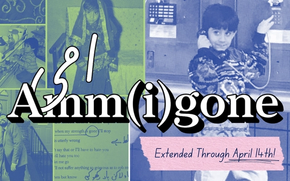
Amm(i)gone
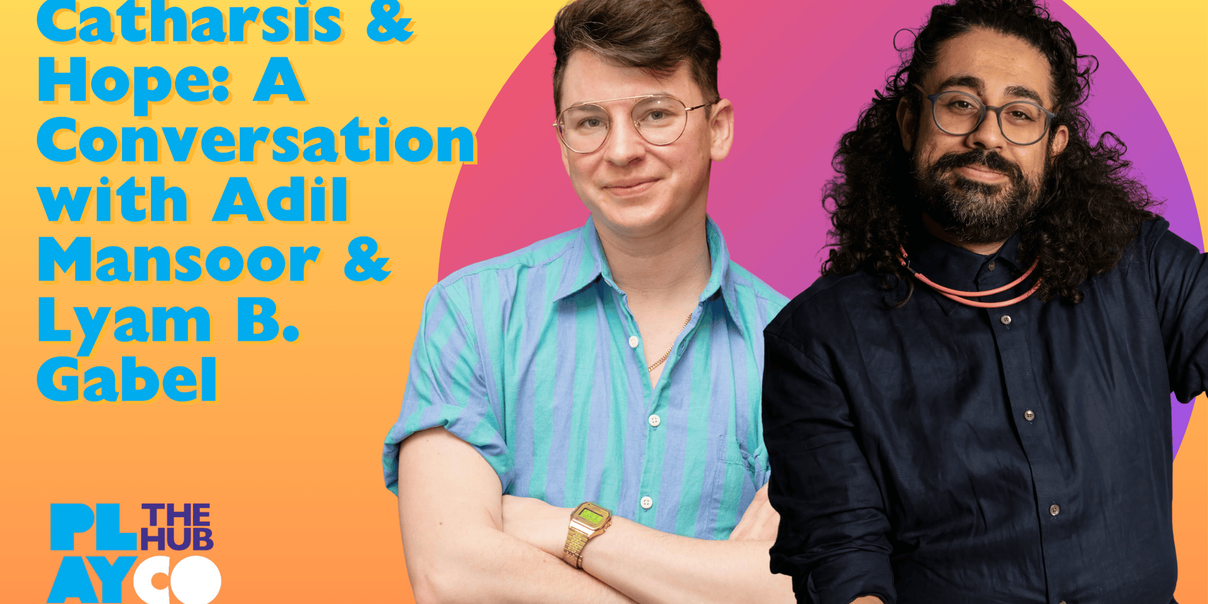

Adil Mansoor (Creator, Co-Director, Performer) (he/him) is a director centering queer folks and people of color. He has developed new work with The Eugene O'Neill Theater Center, Manhattan Theatre Club, Sundance, Playwrights' Center, Mercury Store, The Playwrights Realm, Pittsburgh Public Theater, and others. Directing projects include Daddies by Paul Kruse (Audible), Gloria by Branden Jacobs-Jenkins (Hatch Arts Collective), and Kentucky by Leah Nanako Winkler (Pittsburgh Playhouse).
He is a founding member of Pittsburgh’s Hatch Arts Collective and the former Artistic Director of Dreams of Hope, an LGBTQA+ youth arts organization. He is an NYTW Usual Suspect and former Sundance Art of Practice Fellow. He was part of the inaugural Artist Caucus gathered by Baltimore Center Stage, Long Wharf, St. Louis Rep, and Woolly Mammoth. Mansoor received the Emerging Artist Carol R. Brown Award in 2024. He holds an MFA in Directing from Carnegie Mellon University.
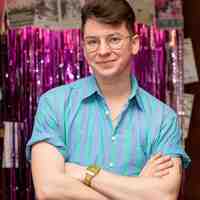
Lyam B. Gabel (Co-Director) (they/he) is a trans* performance-maker and community archivist. He lives between the mountains of Eastern PA and NYC. They are making DADDY, a performance and public health resource about transmasculine pregnancy. Their work, the dance floor, the hospital room, and the kitchen table made from 32 interviews exploring queer care received a NPN commission, was shown at the TCG meeting in 2022, and was exhibited at the Prague Quadrennial. They directed the premiere of The House of Telescopes by Kairos Looney for Pipeline. They developed work at Ars Nova, Judson Church, Kelly Strayhorn, The Theater Offensive, and The New Orleans CAC among others. Lyam co-created Alleged Lesbain Activities, a touring musical about the history of lesbian bars funded by the MAP fund and the NEFA National Theater Project. Drama League Resident 2023 and 2021, Drama League Fellow 2017. Assistant Professor at Lehigh University.

Annie Jin Wang (she/her/hers) is the Associate Director for Programming at PlayCo. She is a first-generation Chinese American dramaturg and generative artist whose body of work investigates constructs of race, gender, and citizenship. She is currently supporting new projects in development at Beth Morrison Projects, Musical Theatre Factory, and the Perelman Performing Arts Center. Her own writing has been developed with Soho Rep, Target Margin Theater, Fresh Ground Pepper, Ferocious Lotus Theatre Company, and PlayGround-NY. She also serves as the Artistic Associate at Theater Mu. Annie holds an MFA from Columbia University, and BAs from Wellesley College.
ANNIE JIN WANG: So, there have been a lot of conversations around the content of Amm(i)gone and the myriad entryways that people have into this piece. For this conversation, I really want to know more about your collaboration–how this process has impacted you as artists, and also as friends. Tell me your origin story.
ADIL MANSOOR: There are so many wonderful points of connection. We met at the Network of Ensemble Theaters Conference (NET) in Seattle in 2017, and then we went to grad school together.
AJW: By coincidence?
LYAM B. GABEL: Well, kind of. There was a really intentional conversation about what’s next for the world of ensemble theatre, and there was a cohort of younger makers there, including Adil and I, and then we just didn’t stop talking for three days. I remember being on the bus and at the end of the conference, still in conversation. Adil then talks to me about his journey going to grad school; I was doing the Drama League fellowship at the time and considering grad school for my career and had started the application process. And then when I was in final rounds for CMU (Carnegie Mellon University), I stayed with Adil, and Adil is definitely a big reason why I ended up in the program.
AM: Once we were in school, we were in almost all of the same courses. One of the highlights for me was in my second year Lyam was working on The Tempest in class and did this really incredible one-person Prospero-Ariel situation. I got to be the actor in rehearsal with Lyam as he experimented with this stuff and the two of us just had an artistic blast. I remember feeling really invigorated, both as performer and as artist generator in that moment. I was like, “Oh, I could do this for a long time, this feels really good.”
LBG: Yeah, that was super fun. I was experimenting with the whole thing as a puppet show. Prospero is like a kid trying to explore this new relationship to power and place, and it was really fun to play with Adil in that context. I'm not sure, Annie, if you’ve heard the genesis of Amm(i)gone in other spaces–
AJW: I would love to hear it in your words.
LBG: At CMU, we all have to pitch a few productions every year and Adil was talking about his capstone production. He had this idea to think about Antigone as apology to and from his mom. I remember there were a lot of canonical works that I had trouble entering that Adil would find these amazing ways into through his family. Adil started exploring, talking to his mom about this play, and analyzing Antigone with his mom as the dramaturg, and bringing in pieces and parts of that to classes. We all knew that it was a really important piece even then. So that was exciting, to sit as witness in those classrooms.
I wasn’t able to see Adil’s residency at Kelly Strayhorn as I was touring the Lesbian Bar Project at the time, so he sent me the video and I had to stop it multiple times to get on the floor and cry because of what I was going through at the time with my own mother; because of my own experience growing up really religious and queer, and because knowing Adil, the power of the work was so evident even then through a screen.
Should I keep going, Adil? Or do you want to pick up the thread?
AM: No, I’m happy to listen, this feels so good.
LBG: After watching that video, Adil and I went to get cider at Threadbare in Pittsburgh, and Adil asked me to come on as a co-director for the project. Adil has such a strong vision for what the work is and how it needs to feel, and I could be an outside eye. And then, of course, COVID happened, but Adil and I started working online. We started doing these workshops, these improvisations with the text that Adil already had and the lecture performance form was strong. We played with other performative things, and that eventually brought us to a digital version of the production. And…the rest was history.
AM: Listening to that is actually so affirming. Your memory is so good, you remember so much. I remember having done one version, totally alone, and parts of that felt really right. But then there were also, just like hours in the studio spent crying and looking out of a window, and that can also be part of the process. But it wasn’t sustainable. [laughs] As I was trying to figure out how to bring collaborators into the process I was like, “Oh, I want Lyam on the team. This person makes me feel strong as a performer, and I felt deeply connected to them as a friend. We have all these wonderful, shared lived experiences, but we are also so different from each other.” That’s who I needed as a collaborator.
AJW: I was just reflecting that this really does feel like a conversation–the way the two of you are passing the story back and forth feels really nice for me also. Do you feel that, being both directors, you talk to each other differently?
AM: Actually, the way I work with new plays now, specifically solo work, which I've gotten to do a fair amount, is 1,000% informed by how Lyam showed up for this show. As Lyam was working with me on Amm(i)gone, I started working with my friend Paul Kruse on Once Removed, his really beautiful, powerful, personal audio play about his distant cousin who their family lost to HIV and AIDS before Paul was of conscious age. I actually didn't know how to approach the work until I realized, “Oh no, yes I do. I'm witnessing the ways in which Lyam is showing up and caring for the project, and challenging me.” And I feel like that was like another version of school for me.
LBG: One of the things that's really amazing about this collaboration is that Adil and I knew each other so well, and that we've been able to build on that relationship as friends and collaborators. There are moments in our process where we’re really, really transparent with each other in a way that I sometimes am with playwrights, but I’m always really conscious of wanting to let the playwright have space in their own process. I’m conscious of that with Adil as well, but we’re often in the nitty gritty of, for example, deciding the color of a shirt where usually by that time the playwright has passed that decision to me. We’re talking about those things together because in the world that Adil is occupying, it’s really important that he is involved in building it. Adil will also step out of the frame in tech and watch someone else inside it so that he can make sure that it’s telling the story he wants to tell textually and visually, and that the layered nuances he wants to have are present.
AM: We're both teachers and have done a lot of teaching artists’ work. We both train teachers. We work with classroom teachers. We work with students across all ages. That’s a major point of connection for our friendship and our thinking. But we show up in the room in really exciting ways, and Lyam is a really dynamic director in terms of working with performers and actors. We'll use all kinds of language to unlock different things, and some of my favorite moments in the rehearsal room are when Lyam will be like, “What is the objective teacher-wise? Like, what is your learning objective?” Then I say, “I want the audience to fall in love with my mom.” And then they say, “Okay, well, what will you share to accomplish that objective? What’s the research? What’s your mode?” There's just so many different ways into cracking the performance, and the teacher language is one of my favorite ways in with Lyam.
AJW: As the piece was starting to gain traction, going to Woolly Mammoth, going to Long Wharf, what are some of the things or conversations that you've had that are new to the piece?
LBG: When we were doing this show in Pittsburgh, and even to a lesser degree, the first time we presented it in New York, a lot of the audience was known to Adil so we were working with fewer degrees of separation. When we were going to D.C., we knew that it would be mostly people who had never encountered Adil before, so we were thinking about how Adil shapes that relationship with the audience throughout the course of the play. How are they meeting Adil? How does Adil bring them into this world? What is he sharing, or not sharing? Translating or not translating?
AM: I agree with all of that. The thing that popped up in my mind was as the show grew into other spaces it had longer and longer runs, and so we’ve been talking through what it means for me to sustain a show across several months or a tour, and how to stay vulnerable and authentic. The first three years we spent doing the show, it kept changing as my life and my relationship with those closest to me shifted and grew and developed. So we would consistently adjust the show to account for that, and by the time we were heading to D.C. it became clear that that wasn’t actually supporting the show anymore. In my life at that point, the original show was written five years ago and my mom is a different person, and I’m a different person. All in wonderful ways! So we froze the story of the show in 2022 and let the story kind of stay there, even as my life continues. And that’s helped me. All of a sudden there are times when 2025 Adil is in awe of 2019 Adil.
AJW: How do you take care of each other on days where developing or performing the show is difficult?
AM: I don't think there was a day in DC where we didn't have lunch together. You know, we're spending eight hours in the same room and, like, “Oh, this one hour of lunch, yeah, of course, we want to spend it together.” And at the same time, Lyam is really generous about going, “Adil, go be in your dressing room, go to your apartment, be alone!” A lot of it is the shared time, the shared language. And some of it is just utter transparency–Lyam will transparently ask if they should take something on on their own; a detail that we can flesh out and figure out the nuances of so that I can focus on the performance. What a gift it is to be able to know when I need to know.
LBG: Yeah, totally. This piece is so vulnerable and in oral history work, there is sometimes a point at which it feels like in order to continue on to the next level, there must be some sort of reciprocity to someone’s vulnerability. That’s inescapable when you’re working with one of your best friends, and when there's been so many points in this process where I've been undergoing major life changes while we've been in rehearsal. I was pregnant at Woolly Mammoth, I’m a new parent, and my kiddo’s in the room with us. Getting to be inside of this process throughout those moments of transformation has been really grounding and important for me as a person in community with Adil and all of our collaborators, and Adil has made space for that. To have moments of holding one another in the process.
AJW: That’s very prescient; I was going to ask how becoming a parent has changed your relationship to this piece.
LBG: I do feel like there was this really transformative moment at Woolly. I think it was in tech, and I was like, “Oh, I'm watching this piece for the first time as a parent. Instead of seeing myself in the child, I see myself in the parent.” And it gave me a new lens into Adil mom's journey through the work, and just a new way to connect to it. So I knew that this work is really powerful for children, and I think it became evident to me how cool it also is for parents to witness.
AJW: Okay, last question, and then I also want to give you a chance to talk about anything we haven’t covered yet. First, when you were first developing, did you ever think it would come this far? And as you’re about to head into the New York premiere, what are you hoping to gain, or learn, during this run?
AM: There’s a part of me that, as Amm(i)gone started to come to life in Pittsburgh, I was afraid to say out loud that I wanted it to have a life that kept going and going. In 2020 I had a fellowship at New York Theatre Workshop and I thought New York was where I was headed. The universe obviously had a very different plan for all of us, and so I stayed in Pittsburgh and just fell in love with my city all over again. For a long time, I felt like I couldn’t be a working theater artist on the national level while living in Pittsburgh because I didn’t see that model practiced all that frequently. So it was a desire, but did I think it was possible? I don’t know. And back then in 2020, I didn’t know the landscape in New York. I didn’t know PlayCo or The Flea. I met [Annie] in Pittsburgh at [the 2022 TCG Conference], and then I had a meeting with Kate [Loewald] and Annie, and in my mind I was like, “I really want to work with these people!” I didn’t see myself as a playwright, so I kept thinking I was meeting with you to get to someday direct–
AJW: Which could still happen!
AM: –and suddenly, it really did feel like suddenly, Maria Goyanes in D.C. was like, “Hey, Kate from PlayCo is going to come see the show,” and then that night, Kate sat down with me and Lyam and asked these questions that have always been floating around the show, and something about the way she engaged with us made me go “I can't wait to breathe life into this again and again and again.” That's such a long answer, but thanks for asking such a lovely question.
LBG: I hope that it gets to be in conversation with all these other things that are happening in New York. But I think a deeper hope is that the project keeps doing what it has been doing all along, and that's creating moments of recognition and transformation and catharsis and hope and struggle for audiences of so many different identities. And I can point to specifically queer audiences, specifically artists who have audiences who have grown up in very religious households, but also many, many people outside of those identities have found the piece really transformative. And I think it's felt really necessary in a lot of people's lives. It's felt necessary in my life, but we've had audience members really respond strongly about how deeply they needed to witness this work, and I think that’s all you can ask for. That's the best thing theater can do, so I hope it just keeps doing that.
AJW: I resonate with all of that so much. Okay, my last, last question is: will you be having lunch together every day in New York?
[laughter]
AM: Who knows!
LBG: Do you have recommendations for where to eat?
AJW: We will definitely create a list for you–if there’s one thing PlayCo loves to do, it’s eat. Maybe I’ll crash your lunch one day!
AM: Yay!
(This conversation has been edited for brevity and clarity.)
Annie Jin Wang