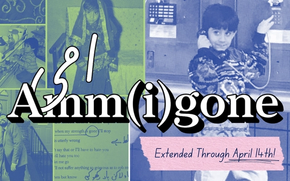
Amm(i)gone
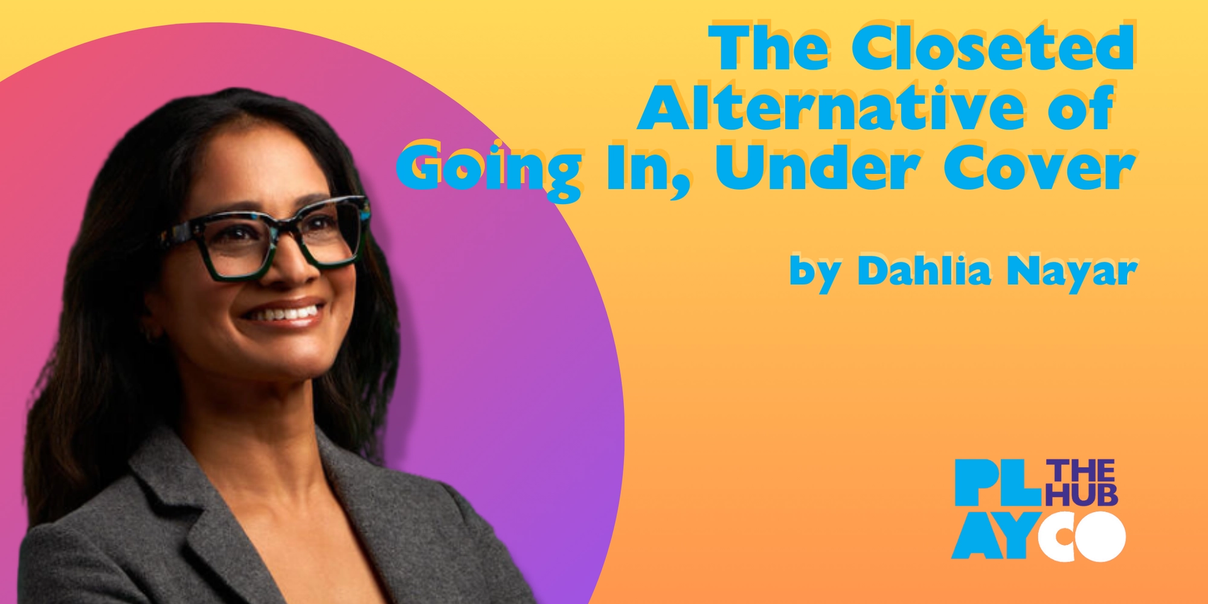

Dahlia Nayar is a multimedia dance artist and PhD candidate in Performance Studies at the University of California, Berkeley. This entry includes excerpts, reformatted, from her dissertation: Performing the Quiet: Minoritarian Gestures, Witholdings, and Refusals. Prior to her doctoral studies, Dahlia toured nationally and internationally as a choreographer, performer, and multimedia artist. She is a recipient of the Jacob Javits Fellowship, Massachusetts Cultural Council Fellowship in Choreography, and the National Dance Project Touring Award.
Some years ago, during the first term of the current president, I was one of a dozen artists of color invited to a residency planning meeting in Birmingham, Alabama. It was my first visit to the South, one week after the infamous Charlottesville rally that galvanized brazen and permissible demonstrations by white supremacists locally and nationwide. During a brief mid-morning break, Dan, a performer from the Choctaw tribe of Mississippi, sidled up to me and introduced himself. With a cheeky grin, he said, “It’s so nice to meet a real Indian.” After almost spitting out my coffee and regaining my composure, I responded, “Unfortunately, I am only half.” To this he feigned disappointment, spurring us to laugh harder, without need of explanation or anthropological interrogation. This memorable exchange captures for me the value, empowerment, and healing that can happen in an emergent commons of minorities. Dan’s genius comment called out our mutual colonized identities, and momentarily diffused the tension at hand as artists being invited to tour the South in a time of resurgent racial tension in the country. Fast forward to present day political polarization. The debates around the value of diversity, equity, and inclusion (among other things) bring to the fore the ever unresolved debate in our country of belonging and non-belonging. Amidst the cacophony of relentless rhetoric that enables and perpetuates violence and cruelty towards those deemed other on multiple fronts, this anecdote reminds me of the refuge I find in Adil’s work: the minoritarian labor to see complexity amidst reductive hyperbole, to find belonging to each other despite our incommensurable differences, and to carve out expansive ethics of care for one another through humble trial and error.
As a performance studies scholar, my work hones in on how minoritarian performances propose multiple practices of refusal.¹ James Baldwin’s laments, marginalized peoples are “bound by the nature of our categorization.”² The term “minoritarian” might be considered in part as the minor subjectivities produced by the conditions and effects of the aforementioned majoritarian neoliberal systems. Minoritarian proposes an affiliation or belonging to one another through shared but not necessarily equivalent or identical experiences of injury.³ By refusal, I am thinking about refusing dominant ways of knowing and being, but also refusal of some of the dominant scripts of protest and agency. Scholar Tina Campt writes of a longing “to think through and toward refusal as a generative and capacious rubric for theorizing everyday practices of struggle often obscured by an emphasis on collective acts of resistance.”⁴
While not, I repeat, not refuting the necessity or urgency of speaking up and speaking out, I’m interested in alternative ontologies of sustenance and vulnerability that are not circumscribed by answering back. I wonder how minoritarian artists remind us of the vital importance to reinvigorate our souls apart from protest. I am interested in how the work of minoritarian artists shifts the terms of the back and forth, the implicit assumptions of a habitual dialectic between resistance movements and dominant power structures; a back and forth that is often confined to hegemonic frameworks of engagement. What happens when we find/create/instigate minoritarian resonance and attunement, resonance that is not reliant, dependent, appealing to or sometimes even bothered about dominant recognition or acceptance? In subtle, caring ways, I am interested in how Amm(i)gone addresses two prevalent dominant scripts in our culture: apology and “out, loud, and proud”.
Adil’s work is framed as an apology to and from a mother. One may wonder, in a time when the loudest voices are also the most unapologetic ones, or the public performance of apology can so often come across as hollow and insincere, how can a focus on apology be of any help? Here is where I beckon audience members to attune to the rich minor aesthetics offerings in the performance. For example, notice how the work offers sonic modes of care: the sound of intentional restraint, the sound of intent listening, the pauses that signal hesitation, the audible effort of translating, and through making space for the untranslatable between English, Urdu, and Arabic. The untranslatable can be thought of as intentional illegibility. While illegibility might provoke dismissal or erasure, I am interested in exploring how the illegible also invites. That is to say, how, in lieu of his mother’s live presence in the show, the recorded sounds of restraint, withholding, listening, and translating, and not being able to translate are modes that signal and beckon effortful attunement. These sonic registers indicate how Adil and his mother remain, to some extent, unknowable to each other. Perhaps this offers another way to think about the labor of minoritarian commons: acknowledging incommensurability but also finding ways to actively care for each other’s unknowability. The sound of hesitation is one that does not presume to know, or does not presume that the other is knowable.
A second example of minor aesthetics in Amm(i)gone has to do with Quiet covering. Adil’s care in covering his mother’s likeness in presentation to the public, brings to mind Vivian Huang’s work on inscrutability⁵, in how covering can be interpreted not only as a form of protectiveness and preservation, but also as a way of expanding the possibilities for alternative relationalities, in this case enacted with forethought and stitch by stitch care. I am interested in how the use of intentional covering, withdrawing, and withholding in Ammi(gone), signals both the how cloth becomes a racialized and xenophobic weapon against Muslim Americans that signals both threat and target, but, through this performance, enables connectivity, connection, togetherness, expansive forms of relationality through material and embodied envelopment.
Finally, a third minor aesthetic can be found in how Amm(i)gone effectively queers the western/European canonical status of Antigone through global south multilingual interventions and interpretations, while also queering the notion of the “closet” and the imperative to “come out”.
What if an alternative closeness and intimacy is accessed through going in, together, quietly, and with hesitation/humility? How might this open up spaces differently to out, loud and proud pronouncements? This is not to say that out, loud, and proud is “wrong” or inferior, but to propose that there is space for more than one way. Going inwards, under cover, quietly and with hesitation, is not a prescription in opposition to “out, loud, and proud,” so much as an alternative that might have more appeal or accessibility to some⁶. Of course here we see that quiet hovers uncomfortably close to suppression or repression, shamed and invisible. Yet, Adil’s work proposes that hiding or covering can provide connectivity in refuge, and does not necessarily need to be reduced to shameful sentencing.
I invite audiences to contemplate all the ways in which Amm(i)gone expands dominant scripts of apology and coming out, with care at its core. Adil’s apology does not hinge on simplistically regretting a wrongdoing nor submitting to power or “rightness” of any institutional dogma. It is an apology that aspires for a closeness with another, that seems unattainable in the here and now, but possible in a reimagined past and future elsewhere⁷… under cover and behind closed doors.⁸
¹ The contemporary artists I study explicitly and inexplicitly contend with the legacies of chattel slavery, racialization, xenophobia, homophobia, misogyny, Islamophobia, orientalism, settler colonialism.
² Baldwin, James. Everybody’s protest novel. Indianapolis: College Division, Bobbs-Merrill Co., 1949.
³ See Muñoz, José Esteban, Tavia Nyong'o, and Joshua Takano Chambers-Letson.
The Sense of Brown. Durham: Duke University Press, 2020.
⁴ Campt, Tina Marie. “Black Visuality and the Practice of Refusal.” Women & Performance: a journal of feminist theory29, no. 1 (n.d.): 79–87. https://doi.org/10.1080/0740770X.2019.1573625. Additional authors on refusal include: Bonnie Honig, Giorgio Agamben, Adriana Cavarero, and Saidiya Hartman
⁵ Huang, Vivian L. Surface Relations: Queer Forms of Asian American Inscrutability. Durham: Duke University Press, 2022.
⁶ See for example Jasbir Puar’s seminal work Terrorist Assemblage with respect to the framing of “homonationalism” and how dominant scripts of assert acceptable homonormativity that serves the perception of a liberal state while exercising the association of Muslims with terrorism in order to justify violent measures in the name of security.
⁷ See Muñoz, José Esteban, Cruising Utopia: The Then and There of Queer Futurity. New York: New York University Press, 2019.
⁸ Dahlia Nayar is a multimedia dance artist and PhD candidate in Performance Studies at the University of California, Berkeley. This entry includes excerpts, reformatted, from her dissertation: Performing the Quiet: Minoritarian Gestures, Witholdings, and Refusals
Dahlia Nayar